
Stem cell therapy holds promise for the treatment of several diseases. Turning that promise into scalable stem cell cultures for therapeutic applications can be challenging. Bridging the gap between research and clinical-grade production requires rigorous process design and use of standardized materials.
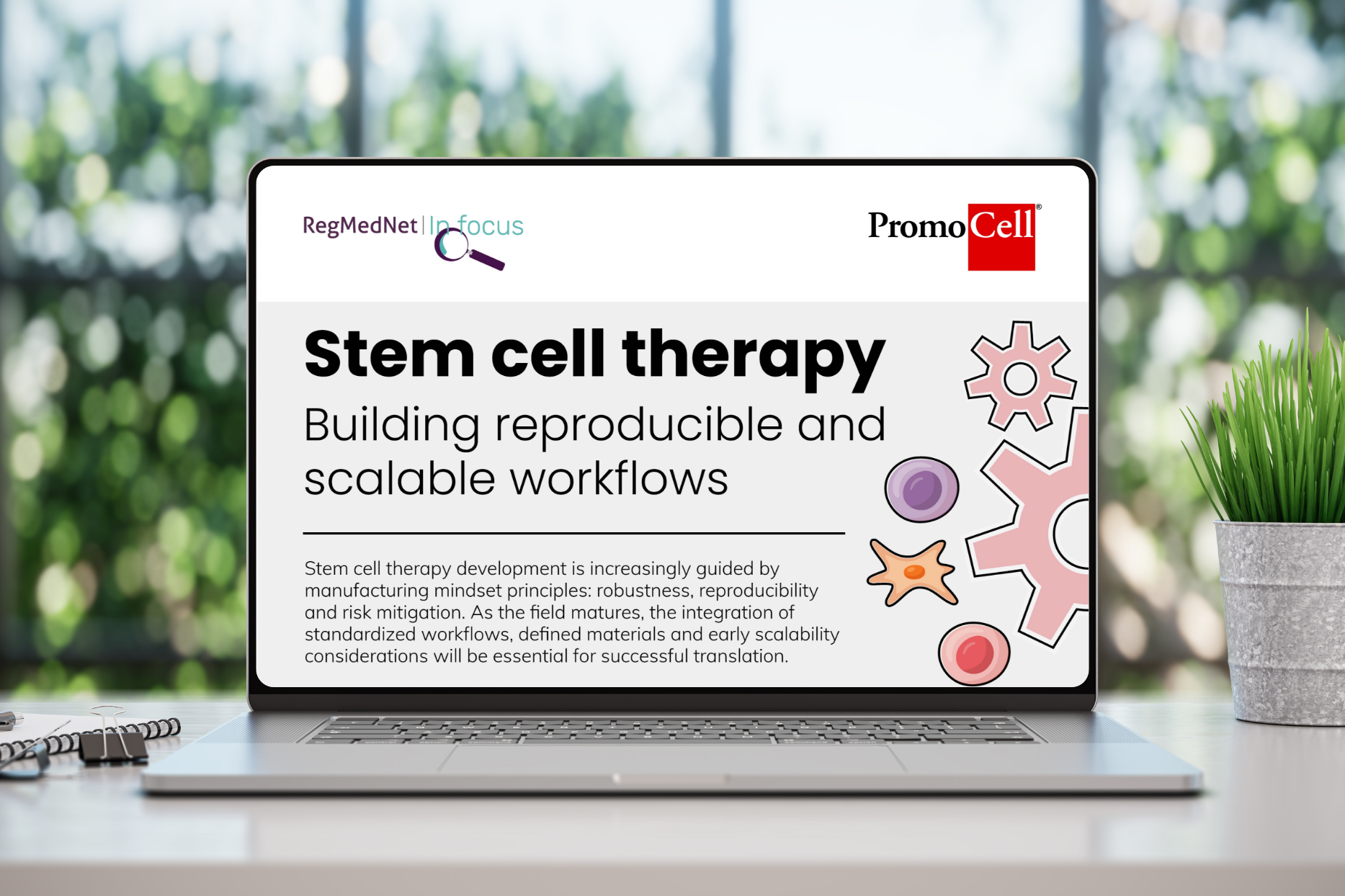
To support you at every step from the lab to the clinic, we partnered with RegMedNet on an In Focus feature exploring stem cell therapy workflows. It highlights practical steps for building reproducible and scalable workflows for stem cell therapy. We also explore strategic decisions that determine whether a workflow will successfully translate into commercial manufacturing.
Infographic
The feature includes a downloadable infographic, available on the RegMedNet website, that maps out the stages of stem cell therapy development, from initial cell sourcing through to quality control and cryopreservation. It covers three stem cell platforms (iPSC-derived cells, mesenchymal stromal cells, and hematopoietic stem/progenitor cells), and highlights where processes commonly break down and what teams can do to prevent it.
From the infographic, you’ll learn how to:
- Address the most common sources of variability in your stem cell workflow.
- Make cryopreservation choices that protect post-thaw cell viability and function.
- Assess and build industrial readiness with confidence.
- Set yourself up early for GMP success by transitioning to serum-free or animal component-free (ACF) systems.
Expert interview
What does it really take to move a stem cell workflow from the bench to the clinic? In an exclusive interview, Dr. Hagen Wieland, our R&D Team Lead, discusses the decisions that make the difference. The interview covers the practical considerations of process development and the cultural shift needed to think about manufacturing constraints while still in the discovery phase.
What you'll learn from the interview:
- Sources of variability in stem cell culture systems and how you can mitigate them.
- Challenges associated with moving from bench to bioreactor, and how process understanding can help you address them.
- How early adoption of defined or animal component-free systems supports a smooth transition to GMP manufacturing.
- How antioxidant protection strategies during cryopreservation can preserve stem cell function.
- When documentation should start, and how early planning supports long-term success.
- How the culture format and raw material choices at the research stage can influence commercial manufacturing.

Dr. Hagen Wieland - R&D Team Lead at PromoCell GmbH
Visit our feature Discover expert insights into building scalable and reproducible workflows for stem cell therapy